


Crypto Casinos in Germany 2026: How Bitcoin Deposits Actually Work, Where the GGL Rules Bite, and How to Spot a Platform Worth Your Money
Crypto Casinos in Germany 2026: How Bitcoin Deposits Actually Work, Where the GGL Rules Bite, and How to Spot a Platform Worth Your Money
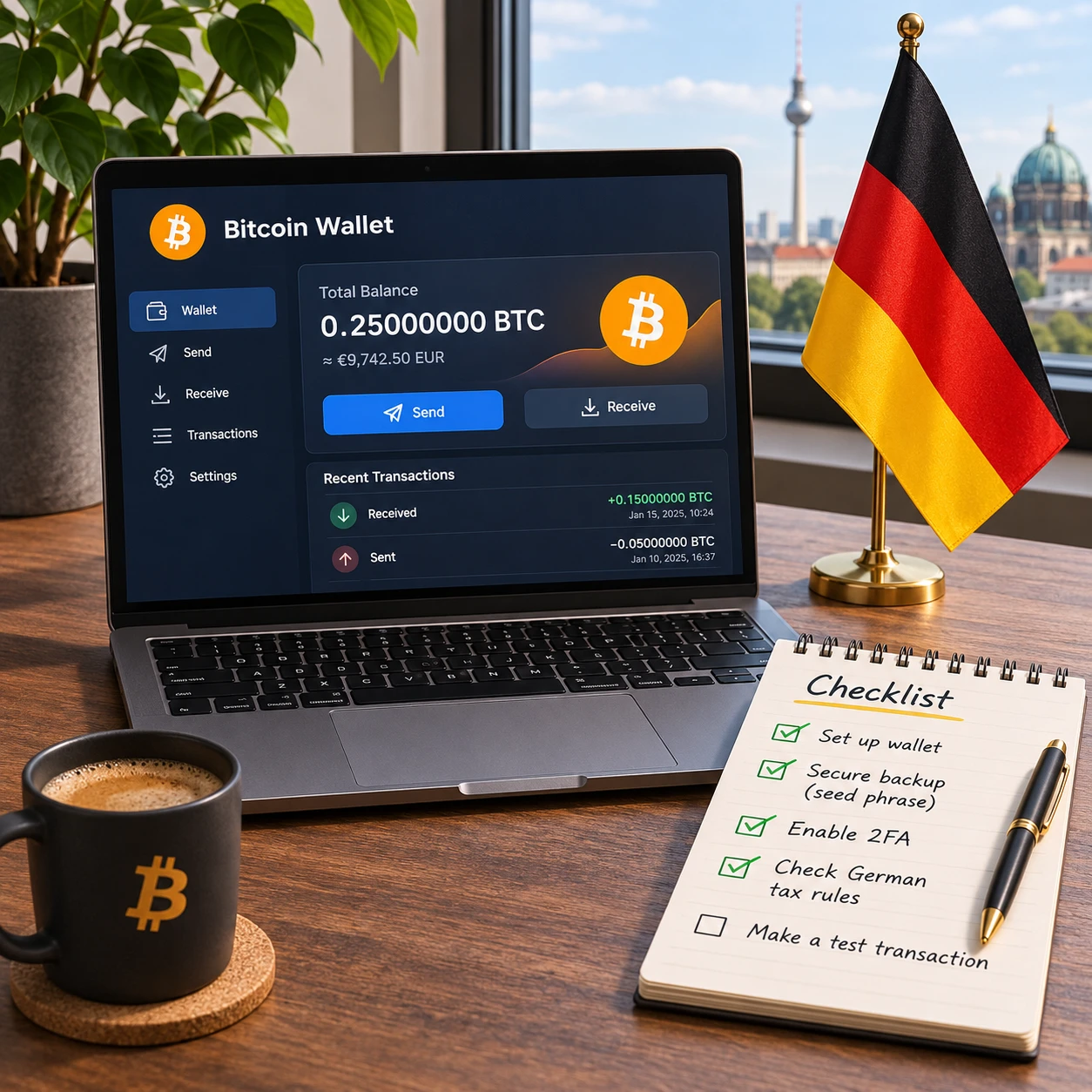
Ask a German player how they pick a crypto casino and the same two questions come back every time. Will this site pay out fast? And will it land me in trouble with my bank, or worse, a regulator? Most of the pages ranking for that search are affiliate copy. They answer neither.
In 2026, crypto deposits are flat-out mainstream. German gambling law never caught up with them. That gap — between what a crypto casino in Germany advertises and what it can legally and practically deliver to someone living here — is exactly where players get burned. It's the whole story behind the Krypto Casino 2026 market, and I'll treat it that way.
So, in order. First the mechanics: how a Bitcoin deposit physically moves from a wallet into a casino balance. Then the legal reality under the Glücksspielstaatsvertrag and the GGL. Then a checklist you can run yourself, cold, without trusting anyone's ranking. This is a buyer's guide, not a nudge to gamble. You need to be 18+, and you should know your local rules before you deposit a cent.
What a 'Crypto Casino' Actually Means in 2026
The term gets thrown around loosely, so let me pin it down. In practice there are three models:
- Crypto-only casinos: no fiat on-ramp at all. You deposit and withdraw in coins, and that's the end of it.
- Hybrid casinos: they take euros and crypto both, usually with separate wallets or a conversion step in the middle.
- Licensed fiat casinos with a Bitcoin option: a traditional operator that accepts a Bitcoin deposit through a payment processor and converts it behind the scenes.
The difference matters more than it looks. It decides who holds the licence, who holds your coins, and who you end up arguing with when a withdrawal stalls. Search 'Bitcoin casino Deutschland' and you get all three mixed together in one results page. Almost none of those sites tell you which one they are.
Coins, Chains and the Stablecoin Question
You notice the differences between coins fast. BTC is the default, but it crawls when the network is congested, and fees swing hard. USDT and USDC on Tron or Ethereum-compatible networks are quick and cheap, and the balance doesn't move with the market. Smaller altcoins sometimes transfer near-instantly, but liquidity and withdrawal support can be patchy.
That's why stablecoins have become the default for anyone who doesn't want their bankroll breathing in and out between deposit and cash-out. Deposit 200 euros worth of Bitcoin, watch it drop 6% before you withdraw, and you've lost money without placing a single bet.
Custodial vs. Non-Custodial: the Line That Matters
Send coins to a casino and they land in the operator's wallet. That's a custodial relationship — just with extra steps and a nicer interface. You don't hold keys to that balance anymore. You hold a promise.
Which is exactly why licensing status and withdrawal history deserve more of your attention than any marketing page ever will.
How a Bitcoin Deposit Actually Works, Step by Step
Here's the flow, minus the jargon:
- Create an account. Some sites want only an email address.
- Choose the coin and network. This is where mistakes happen. Sending USDT on the wrong network can mean lost funds.
- Generate the deposit address or QR code. The casino creates one for you, often unique to your account.
- Send from an exchange or a self-custody wallet. Copy the address carefully, and double-check the first and last characters.
- Wait for confirmations. Bitcoin typically needs one to three confirmations, which can take from ten minutes to an hour.
- Balance credited. The funds appear in your casino account.
Two things catch people out. Network fees first: a cheap-looking exchange withdrawal can cost more than you expected, and on a small deposit that fee eats a noticeable chunk of it. Second, 'instant' deposits are usually the platform pre-crediting your balance before the transaction confirms on-chain. Convenient for them. It's also the reason winnings sometimes get frozen when a deposit later fails.

Withdrawals: Where Speed Is Real and Where It Isn't
Deposits are theatre. Withdrawals are the real test. Three bottlenecks, and they stack:
- Internal risk review: a manual or automated check before the casino releases funds. This is where most delays live.
- Blockchain confirmation: usually minutes, but it depends on the network and the fee the casino pays.
- The off-ramp back to EUR: your exchange, its limits, and your bank's willingness to receive the money.
Every fast withdrawal crypto casino slaps 'instant payouts' on its banner. Judge the median, not the banner. A genuine sub-30-minute payout needs automated risk review, a verified account, a withdrawal under the site's auto-approval threshold, and a fast network. Miss one of those and you're looking at hours or days. Hunt down player reports with timestamps. One cherry-picked screenshot proves nothing.
KYC: the Step That Decides Everything
A no-document sign-up is not a no-document withdrawal. Verification tends to trigger at the first cash-out, when you cross a threshold amount, or when your behaviour looks odd to a risk engine. Typical asks: a photo ID, proof of address, and sometimes proof of the source of funds or wallet ownership.
When the KYC request lands tells you more about a platform than its licence badge does. A site that explains its rules upfront and verifies you in an hour is behaving predictably. A site that goes silent on verification until you win is a warning sign, full stop.
Provably Fair: Reading the Receipt, Not the Badge
Provably fair is a real mechanism. It's also oversold constantly. Here's the actual machinery:
- The casino commits to a server seed hash before the round, so it can't change the seed afterwards.
- You contribute a client seed.
- A nonce increases with every bet.
- After the round (or when you rotate seeds), the server reveals the original seed, and anyone can recompute the result.
What it proves is narrow: the outcome of a round wasn't altered after the fact. What it doesn't prove is the return-to-player percentage, the fairness of bet limits, the bonus terms, or whether the operator holds a licence anywhere. A provably fair casino can still be a badly run business.
How to Verify a Round Yourself in Five Minutes
- Open the fairness or seed section of your account panel.
- Note the active client seed and the hashed server seed.
- Play a few rounds, then rotate the seed so the old server seed is revealed.
- Copy the revealed seed and check it against the earlier hash with a public SHA-256 tool.
- Run the seed pair and nonce through the site's verifier, or an independent one, and compare the result to what you saw in the game.
If a site buries the seeds, offers no verifier, or won't let you rotate them, that's your answer right there. A real provably fair casino makes this easy.
RNG for the Rest of the Floor
Not everything is provably fair. Live dealer tables and plenty of third-party slots lean on certified RNG auditing from testing labs instead. A trustworthy platform can tell you which games fall into which category — and doesn't blur the two together in its marketing.
Where the GGL Rules Bite: Germany's Regulatory Grey Zone
The Glücksspielstaatsvertrag 2021 built a licensing framework for online slots and virtual poker. Operators who meet the requirements can be licensed, and the authority behind it is the Gemeinsame Glücksspielbehörde der Länder (GGL). There's a public list of permitted operators, plus strict rules on advertising, deposit limits, and payment blocking for unlicensed offers.
Now the uncomfortable part. The overwhelming majority of crypto casinos targeting German-language players aren't on that list. They hold licences from other jurisdictions, or none you could meaningfully enforce. That's the grey zone, precisely. The site looks professional, takes Bitcoin, speaks German — and still sits outside the German framework.
What a Licence Actually Changes for You
This isn't moralising. It's consumer protection. A GGL-licensed operator has real obligations: a defined complaint channel, payout obligations, mandatory deposit limits, verification requirements, and a licence it stands to lose if it misbehaves. That last one is underrated. An operator with something to lose behaves differently from one that can rebrand overnight and reopen on a fresh domain.
The Black-Market Reality and Your Exposure
Play outside the whitelist and there's no GGL dispute route. Payment providers may block transactions, and your bank may start asking questions. The legal position of the player under German law isn't something to treat casually, so read up on it or get proper legal advice for your situation.
My advice is verification, not workarounds. Before you deposit, check that licence number against the authority's public register. Don't rely on a badge image in the footer — those are decoration. For crypto casino licensing GGL questions, the register is the only source that counts. And keep records: screenshots of terms, transaction hashes, support chats.
The Checklist: How to Score a Platform Worth Your Money
Ten minutes, that's all it takes. Score each point from 0 to 5.
- Licence status and jurisdiction. Can you verify it on the issuer's public register? Is it GGL or something else you can name?
- Verifiable withdrawal history and stated median processing time. Are there dated player reports that match the claims?
- Published fee schedule, including network costs and any internal withdrawal fees.
- Provably fair implementation with a working verifier and seed rotation.
- Transparent KYC policy written into the terms, including thresholds.
- Responsible-gambling tools actually present: deposit limits, cool-offs, self-exclusion.
- Independent player reports rather than affiliate copy.
Add it up out of 35. Below 21, walk away. Between 21 and 27, proceed only with a small test deposit and a test withdrawal. Above 28, the site is at least behaving like a serious business. Any zero on licence transparency or withdrawals is a walk-away on its own, whatever the total says.
If you want to see how these criteria look when they're laid out side by side instead of scattered across a dozen affiliate pages, best crypto casino is a sensible place to start comparing — then run the checklist above on whatever you find there. Treat any ranking, mine included, as a shortlist and not a verdict. Score cold.

Red Flags, Fine Print and Expensive Habits
Most of the damage comes from a handful of patterns:
- Bonus terms with huge wagering requirements. A 40x or 50x rollover on deposit plus bonus can make the offer mathematically pointless.
- Withdrawal caps buried in the T&Cs. A 'no limit' banner and a weekly cap in clause 14 don't match.
- 'No KYC' claims that collapse at cash-out. See above.
- Jackpot-style marketing aimed at loss-chasing, especially after a losing streak.
- The currency trap. You deposit in EUR, play in a coin, and withdraw after it has moved 8% overnight.
One habit worth building: set your limits before the first deposit, not after the first loss. Decide an amount you can afford to lose, write it down somewhere you'll actually see it, and use the site's limit tools to make it stick.
Conclusion: Judge the Payout, Not the Landing Page
The spine of all this is simple. Deposits are easy. Withdrawals are the test. Provably fair verifies rounds, not the fairness of the business behind them. The GGL whitelist is the single most useful filter a German player has. And a checklist applied cold beats any ranking list, including mine.
The best crypto casino is the one that pays you, verifies you quickly, and operates somewhere you can actually name. Gamble only if you're 18 or older, only with money you can afford to lose, and stop when it stops being fun. If gambling is becoming a problem, the BZgA helpline at 0800 1 37 27 27 offers free, confidential support in Germany.